
Ethical Elephant Sanctuary Sri Lanka: MEF Kegalle Walk
March 9, 2026
Ethical Elephant Sanctuary Sri Lanka: MEF Kegalle Walk

Sri Lanka is no stranger to elephants. While many foreign tourists might be surprised, we locals are quite used to them.
“Aliya” – elephant, “Atha” – tusker are some of the most common words we use in Sri Lanka. Even a very common adjective we use in our local Sinhala language is “Aliya/Ali) to mention something huge or big.
There is a popular myth that elephants in Sri Lanka are tortured and treated as objects to make money. Is this actually true? Can we find an ethical sanctuary here where elephants are loved and well cared for? Could you even get involved yourself? Let’s find out…
Sri Lanka’s Timeless Elephant Heritage – A Source of National Pride
Elephants have been part of our Sinhalese culture for over 2,000 years. Long before tourism or Instagram, our ancestors understood that these gentle giants are not entertainment. They are family, workers, and symbols of strength and wisdom. Many flags, symbols, and artworks feature elephants. They are considered a sign of prosperity in Sri Lanka.
Elephants in Ancient Sri Lanka – Protection Since the Anuradhapura Kingdom
During the glorious Anuradhapura Kingdom (377 BCE – 1017 CE), our kings didn’t just tolerate elephants — they protected them with royal decrees. King Devanampiyatissa declared sanctuaries where hunting was strictly forbidden. Later rulers like King Amanda Gamini passed the “Magatha Edict,” banning the killing of any animal across the entire island out of pure compassion. Elephants roamed freely, revered in Buddhist teachings and royal processions alike.
This wasn’t some modern conservation idea — this was our 2,000-year-old heritage of living in harmony with nature.
Traditional Roles of Elephants in Farming, Agriculture, Construction, and Even War
In Sri Lankan villages, elephants were never “wild animals to be feared.” They were respected partners. They ploughed fields in the dry zone, carried massive logs during temple construction, and helped build the ancient irrigation systems that still amaze engineers today. During times of war, they served as living tanks — majestic and powerful, yet always treated with dignity by their mahouts.
We Sri Lankans are incredibly proud of this heritage. Elephants helped shape our civilisation, and in return, we gave them respect, care, and a place in our culture. That legacy lives on today.
Elephant Population in Sri Lanka Today
Nearly 7,451 Wild Elephants (2024 Census) and Their Distribution
According to the latest 2024 countrywide census released by the Ministry of Environment, Sri Lanka is now home to a minimum of 7,451 wild Asian elephants — an increase of over 1,500 since the 2011 census. Experts believe the true number could be closer to 8,000. This makes Sri Lanka one of the last great strongholds of the Asian elephant.
One of the best experiences is to see elephants during the World’s Largest Elephant Gathering. You can see it during July/August in Minneriya Sri Lanka.
Where Elephants Live – The Dry Zone Strongholds of North, East, and Southeast Sri Lanka
You’ll find the highest concentrations in the dry-zone regions: North Central Province (Anuradhapura and Polonnaruwa), the Eastern Province, Mahaweli area, and parts of the Southeast. These majestic creatures still roam the same ancient forests and grasslands our ancestors knew, moving in matriarchal herds just as nature intended. Seeing those numbers and knowing our small island protects so many of the world’s remaining Asian elephants fills my heart with pride.
Why Many Foreign Visitors Criticise Sri Lankan Elephant Sanctuaries
Let’s talk honestly about something I’ve noticed while reading hundreds of Tripadvisor reviews. Many visitors from all over the world arrive with strong opinions and quickly label Sri Lankan elephant centres as “cruel” or “exploitative.” I respect their passion for animals — truly. But I also believe we need cultural understanding before quick judgement.
Cultural Differences in Animal Welfare – Cockfighting, Bull Riding, Horse Racing, and more…
The same tourists who criticise us often come from countries where cockfighting is still practiced, bull-running remains a tradition, horse racing involves pushing animals to exhaustion, and retired racehorses are sometimes euthanised when they’re no longer profitable.
These are their cultural norms. Should we judge them harshly for it? No. We should respect that every culture has its own relationship with animals. In Sri Lanka, our relationship has always been one of partnership and reverence.
Historical Context – Colonial Hunting vs. Sri Lanka’s 2,000-Year Tradition of Wildlife Respect
Let’s not forget history. It was European colonial hunters in the 19th and early 20th centuries who organised mass elephant hunts for sport, offering bounties that decimated populations. British officers wrote proudly about shooting dozens in a single day. Meanwhile, our Anuradhapura kings had already banned wildlife hunting centuries earlier.
We should be very proud of our heritage and culture. Sri Lanka didn’t need Western conservation lessons — we invented them over two millennia ago.
Introducing Millennium Elephant Foundation – A True Ethical Elephant Sanctuary

This is exactly why I want to shout from the rooftops about the Millennium Elephant Foundation in Kegalle. Even I had my doubts about the place, what they do, why many criticise it – but all those became irrelevant when I visited and learnt what they do – see for myself.
Not that far from Colombo (only 1 hour and 30 mins) and nearly 100 kms, you get to the MEF in Kegalle – just before the famous Pinnawala Elephant Orphanage.
Follow the Google Maps, accurate to the dot.
An Independent NGO with No Government Funding – Powered by Passionate Supporters
MEF is a registered charity and the only certified non-profit in Sri Lanka dedicated exclusively to captive Asian elephants. There is zero government funding — everything comes from caring visitors, volunteers, and generous donors. Founded in memory of a passionate elephant lover, the foundation rescues elephants that have suffered in logging camps, private home gardens, or neglected temple environments.
Rescuing and Treating 08 Captive Elephants from Private Owners and Temples
Today they care for nine beautiful elephants (ages 15 to 53), and have rescued and rehabilitated more than 80 since opening. These are not “orphans” in the tourist sense. These are real rescue cases — elephants with physical injuries from heavy logging work or emotional trauma from isolation. MEF is one of the very few places in Sri Lanka that actively treats both physical conditions and mental stress, helping elephants relearn how to live in a healthy herd.
The Incredible Elephant Walk Experience at MEF
This is the part I will never forget — and the reason I’m writing this post with such passion.
The Educational Elephant Museum Tour – Learn About Asian vs African Elephants, Anatomy, and Why Riding Is Banned


The experience begins with a 30-minute guided tour of their beautiful elephant museum. My guide (one of the most knowledgeable people I’ve ever met) explained everything with genuine love: the differences between African and Asian elephants, trunk anatomy, the incredible 40,000 muscles in that one appendage, and why elephant-back riding should be banned worldwide.
They also shared something fascinating — the maximum weight an adult Asian elephant can comfortably carry without even feeling it is roughly the equivalent of 04 average adults. But MEF has chosen the higher ethical standard: riding only if the clients insist (still they advice not to take this option). They focus on education and respectful interaction.
We learned about daily food requirements (150–200 kg of fresh vegetation per elephant!), what they must avoid (certain fruits that cause digestive issues), and how the foundation sources most of their food through local suppliers and their own efforts. Every detail made me appreciate these animals on a whole new level.
Feeding Fresh Fruits and Discovering How Elephants Eat and Communicate


After the museum, each of us received a basket of fresh fruits. The moment my elephant — a gentle giant named Lakshmi — reached out with her trunk and took a banana from my hand was magical. Trunk to mouth in one graceful motion.
Walking 30–45 Minutes with Your Elephant Through Forests and Natural Terrain
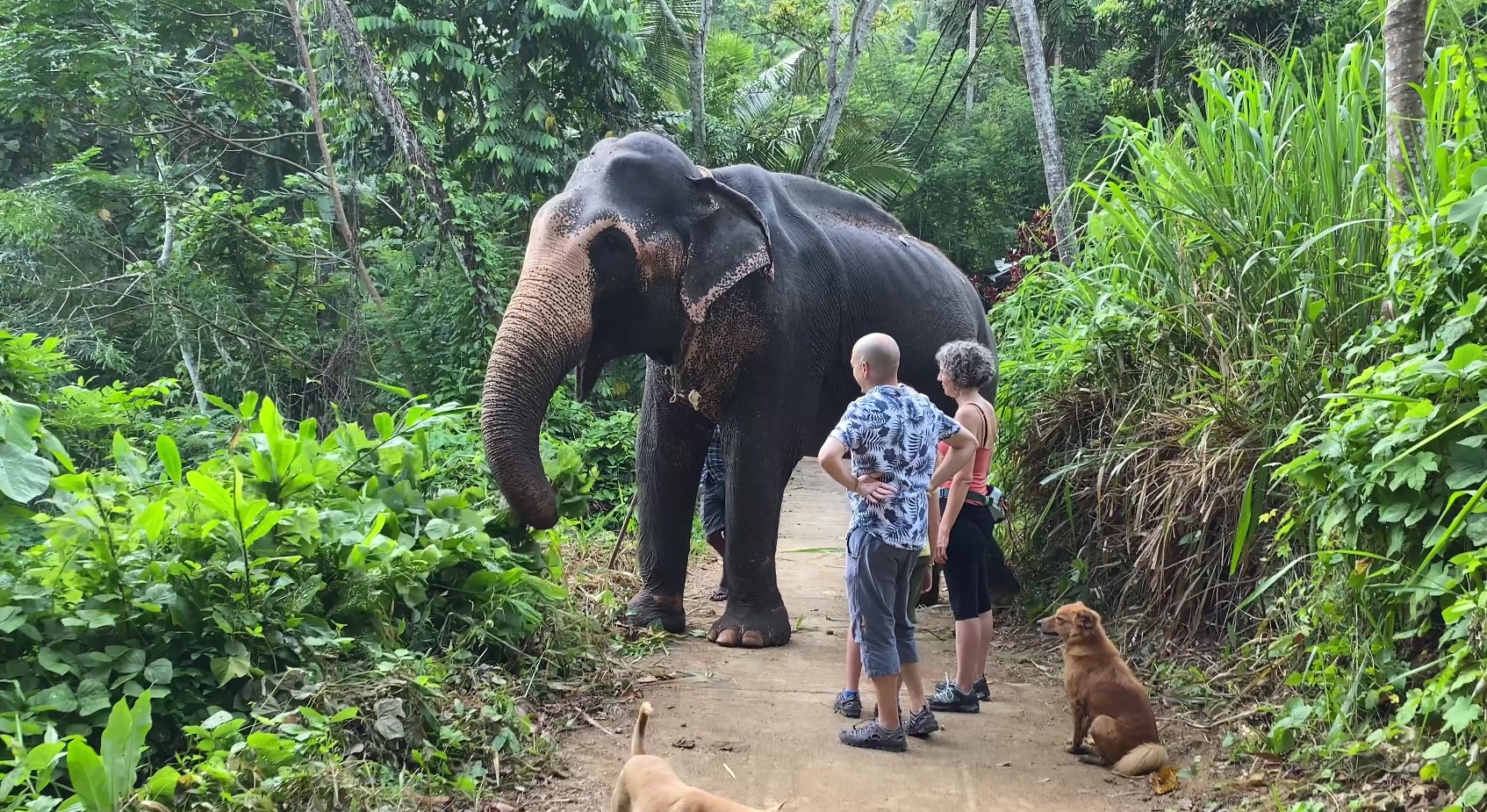
Then came the heart of the experience: the Elephant Walk. For 30–45 glorious minutes, I walked side-by-side with my elephant and her mahout through the foundation’s natural terrain — forests, gentle hills, and open grasslands. We passed the individual sleeping beds each elephant has, learned about their daily walking needs (they must cover many kilometres to stay healthy), and saw exactly how they forage and explore.
No rush. No stress. Just peaceful companionship. I took hundreds of photos and videos without once feeling like I was disturbing her. She was calm, happy, and clearly loved the gentle pace.
River Bathing Session – Moisturising the Nearly 1-Inch Thick Elephant Skin

The grand finale? The river bath in the beautiful Kuda Oya stream. Elephants in the wild bathe multiple times daily to keep their nearly 1-inch (2.5 cm) thick skin moist and protected from the tropical heat. At MEF, visitors get to join in!
I waded into the cool water, helped scrub her massive body with a brush, watched her lie down completely relaxed as we pampered her. She even sprayed us playfully with her trunk. These moments — laughing, splashing, connecting — are why everyone leaves MEF completely in love with elephants.
Meet the Mahouts – True Caretakers and Friends of the Elephants
How the Ankus Tool Works Gently on Nerve Points Without Causing Pain
The mahouts (there are 13 dedicated ones, plus a larger support team of nearly 30 passionate staff and volunteers) are not “handlers” — they are lifelong friends. They use the traditional ankus (a stick with a blunt metal point), but as I learned in the museum, the elephant’s skin is so thick that a gentle nudge on specific nerve points (called nila points) is all that’s needed. It never pierces the skin or causes pain — it’s like a loving tap on the shoulder. The mahouts are trained to never hurt their elephants. They speak to them in soft commands and build relationships based on trust.

These men don’t see this as a job — it’s their calling. They’ve created healthy herds with matriarchs and patriarchs guiding the younger ones. Once rescued elephants recover physically and emotionally, they’re slowly introduced to the group. Watching them form bonds and play together in the free-roaming areas in the afternoons brought tears to my eyes.
Why MEF Is Different from Typical Elephant Orphanages Like Pinnawala
Genuine Rehabilitation, Veterinary Care, and Herd Life vs. Zoo-Like Captivity

Compare this to places like Pinnawala Elephant Orphanage (just down the road in Kegalle). Pinnawala is government-run and feels more like a zoo — large crowds, chained elephants for hours, and staged bathing shows. Many visitors (especially Europeans) leave heartbroken.
MEF is the opposite. Tourism here funds real rehabilitation. Treatments are monitored by university professors from Peradeniya and famous veterinarians. They even run a Mobile Veterinary Unit to help elephants across the country. You see the love in every interaction. The elephants look healthy, relaxed, and genuinely happy.
Tourism Funds Real Welfare – Not Entertainment
Some visitors write negative reviews because they can’t ride anymore. But those who truly love animals? They leave recommending MEF to everyone. This is the model Sri Lanka needs — not false “orphanages,” but real sanctuaries where elephants live with dignity.
Final Thoughts – Why Every Family Should Visit the Millennium Elephant Foundation
My day at the Millennium Elephant Foundation didn’t end when I left — it stayed with me. I left understanding elephants on a deeper level: their intelligence, their emotions, their need for space, family, and respect.
If you’re coming to Sri Lanka — especially with family — please choose ethical elephant experiences like this one. Skip the riding camps. Choose places that heal rather than exploit.
Tips for Your Visit:
- Book the Elephant Walk Experience in advance (We can help)
- Wear comfortable clothes and bring a change for the river bath.
- Take your time with the elephants — they feel your energy.
- Consider volunteering or adopting an elephant to support this incredible NGO.
The Millennium Elephant Foundation isn’t just an elephant sanctuary. It’s a love story between humans and elephants that’s been written over centuries — and now you get to be part of the next chapter.
I promise — you will fall in love, just like I did.
And if you’re planning your Sri Lanka trip, drop me a message on www.meshaunjourneys.com — I’d love to help you create an ethical, unforgettable adventure.